 New York Divorce Lawyer Blog
 A custody case can change the course of a child’s life for years to come. Parents often believe that sharing custody is the fairest solution, but New York courts focus on one question above all others: what arrangement truly serves the child’s best interests. When evidence shows ongoing conflict between parents, an inability to communicate, or a history of domestic violence, the court may conclude that awarding sole custody is necessary to provide the child with the stability and security needed to thrive. A recent New York decision demonstrates how these factors can outweigh a parent’s request for joint custody and underscores the importance of presenting persuasive evidence in contested custody proceedings. If you are involved in a custody dispute, working with an experienced New York family law attorney from the outset can make a meaningful difference in protecting your rights and your child’s future.
New York Court Discusses Domestic Violence in the Context of Custody Disputes


 Many people assume that a long-term marriage automatically results in a 50-50 division of every marital asset. In reality, New York’s equitable distribution laws require courts to focus on fairness, not mathematical equality. When disputes arise over the classification of property, retirement accounts, and each spouse’s contributions to the marriage, courts have broad discretion to craft a distribution they deem equitable under the circumstances. A recent New York
  Custody disputes can become especially difficult when one parent accuses the other of interfering with the child’s relationship or influencing the child against them. New York courts take allegations of parental alienation seriously because a parent’s willingness to foster a healthy relationship with the other parent is often central to the best interests analysis. A recent New York
 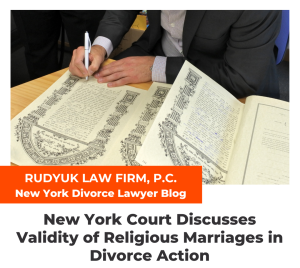 Marriage disputes sometimes arise years after a ceremony, particularly when questions surface about whether a marriage was legally valid in the first place. These issues become especially complex when the relationship began with a religious ceremony but without a formal marriage license. A recent New York
  Divorce cases involving significant assets, allegations of domestic violence, and contested custody can quickly become complex and highly contentious. Courts must carefully balance the children’s best interests with financial fairness between the parties, while also addressing litigation tactics that may complicate the proceedings. A recent